


Language

Currency: GBP

King’s College London

Details

Oncampus/offcampus: Oncampus
Placement Year: Yes
Russel Group: Yes

Distance

London:
in London
Gatwick:
46 km
Heathrow:
24 km

Videos

Videos not found.

Description

With five campuses in central London and 14 Nobel laureates among its alumni and faculty, King’s has secured a place in the world’s top 40 universities while establishing itself as one of Europe’s leading research centers.

Five Campuses in Central London

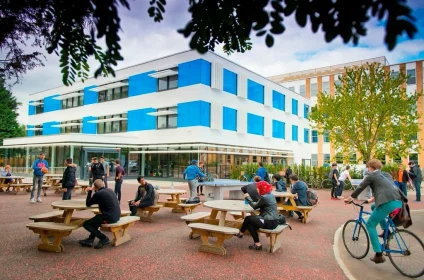
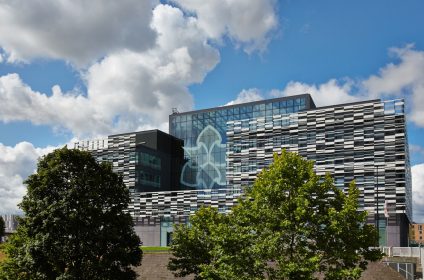
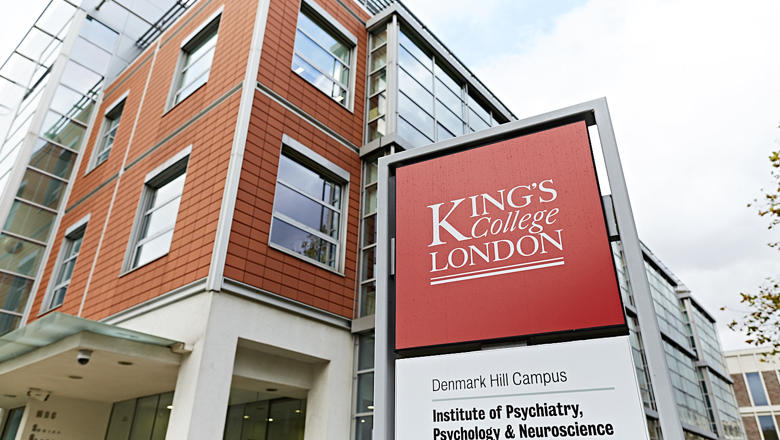
King’s College London operates across five sites in the heart of the British capital, each tied to specific fields of study. The flagship Strand campus sits on the Thames’ northern bank near the Royal Courts, West End theaters, and Somerset House, housing humanities and natural sciences. Guy’s Campus at the Shard’s base brings together medical sciences and dentistry, while nearby St Thomas’ hosts the Florence Nightingale Museum and continuing medical education centers. Denmark Hill became home to the Institute of Psychiatry, Psychology, and Neuroscience, whereas Waterloo accommodates nursing and midwifery.

Rather than creating an isolated student quarter, this arrangement weaves the university into London’s fabric—placing students within its business, political, and cultural life. Parliament, ministries, corporate headquarters, and world-class museums lie within walking distance, opening channels for internships, project work, and expert encounters that let students tap into what one of the world’s major capitals offers during their time at King’s.

Academic Profile of King’s College London

Founded in 1829 as a constituent college of the University of London, King’s evolved from a modest educational establishment into one of the world’s premier research universities. Today it enrolls over 42,000 students from dozens of countries, with an alumni network exceeding 185,000 that includes 14 Nobel laureates in physiology, medicine, physics, chemistry, and literature. The college consistently ranks in the global top 40 and UK’s top 10, while individual programs—from nursing to psychology and international relations—climb to the upper reaches of European and global tables.

The institution’s structure reflects broad academic interests: nine faculties and schools span arts and humanities, business and management, law, dentistry, life sciences and medicine, natural and engineering sciences, nursing and palliative care, psychiatry with psychology and neurosciences, plus social sciences and public policy. Alongside these, King’s actively develops interdisciplinary centers—from the Institute for Artificial Intelligence to the Centre for Sustainable Business—where knowledge from different domains converges to address global challenges.

Academic Directions

A defining feature of King’s programs is interdisciplinarity over narrow specialization. IT intersects with management and politics, media gets analyzed through data, psychology merges with neuroscience and organizational behavior, while economics walks hand in hand with public policy. Students choose from a wide range in information technology, media and creative fields, business and finance, engineering, economics, psychology, international relations—all forming a unified ecosystem where disciplinary boundaries blur easily.

Several programs vividly demonstrate what sets King’s apart from standard approaches. Organizational Psychiatry and Psychology—a rare blend of clinical knowledge with management, essentially studying people in organizations through a psychiatric lens. Tissue Engineering and Innovative Technologies—merging biomedicine with engineering and regenerative medicine to create future biomaterials and tissues. Digital Asset and Media Management—working with content ecosystems, archives, and data that transcend typical media programs. International Relations and War—marking a strong school in security and strategic studies where international politics connects to conflict, defense, and real-world challenges.

Research and Achievements

King’s College London demonstrates strong performance beyond education: its annual research budget exceeds £257 million, and according to the Research Excellence Framework 2021, the university ranks 6th globally for research power. King’s holds first place worldwide in nursing while placing in the top 50 across 41 subject areas, from geography and dentistry to life sciences and humanities. For 2026, QS positioned King’s at 31st among global universities, with Times Higher Education placing it 36th, and sustainability rankings showing it as 14th.

The emphasis on interdisciplinarity appears in priority areas: artificial intelligence, digital technologies, climate and sustainability, healthcare. Partners include the Francis Crick Institute, Rosalind Franklin Institute, Health Data Research UK, plus universities and hospitals in China, Egypt, Singapore, Indonesia, Nigeria, and Hong Kong. Since 2017, King’s has sourced electricity exclusively from wind power and plans to reach net zero carbon by 2025, demonstrating through practice how science can drive tangible change.

Want a Specific Cost Estimate?

Contact us to receive a detailed cost estimate and additional expenses tailored just for you.

Submit Your Request
Social

Смотрите также