
Programs
Date:April 21, 2026
Primary School From age five, children follow the British national program taught by qualified UK educators, with English as the medium from day one. Each subject, even for the youngest pupils, comes with its own specialist teacher who brings depth to that particular field. Language learning runs in parallel streams: alongside English, students pick up …
Primary School
From age five, children follow the British national program taught by qualified UK educators, with English as the medium from day one. Each subject, even for the youngest pupils, comes with its own specialist teacher who brings depth to that particular field.
Language learning runs in parallel streams: alongside English, students pick up Spanish and later French, while clubs offer German or Chinese. Meanwhile, they explore mathematics, sciences, history, geography, art, music, and drama—all introduced by subject-specific experts.
Middle Years
Between Years 7 and 9, students work through the English curriculum enhanced by three separate sciences and a choice among modern languages. Spanish nationals simultaneously complete validation in Spanish and social subjects, which runs alongside their core studies.
Mathematics, English, life sciences, chemistry, and physics form the compulsory block, beyond which lies room for individual choices. This structure prepares them for examination years, where each subject becomes a deliberate step toward future specialization.
IGCSE at King’s College Soto de Vinuelas Madrid
In Years 10-11, students prepare for international IGCSE examinations, selecting up to nine subjects that align with their interests and career plans. While English, mathematics, sciences, and Spanish remain required, everything else takes shape individually—this flexibility opens doors to universities worldwide.
The program carries global recognition and provides solid academic foundations. Examinations run through established international boards, and results gain acceptance everywhere from Europe to Asia.
Available subjects:
- English language, mathematics, biology, chemistry, physics
- History, geography, French, Spanish, and German
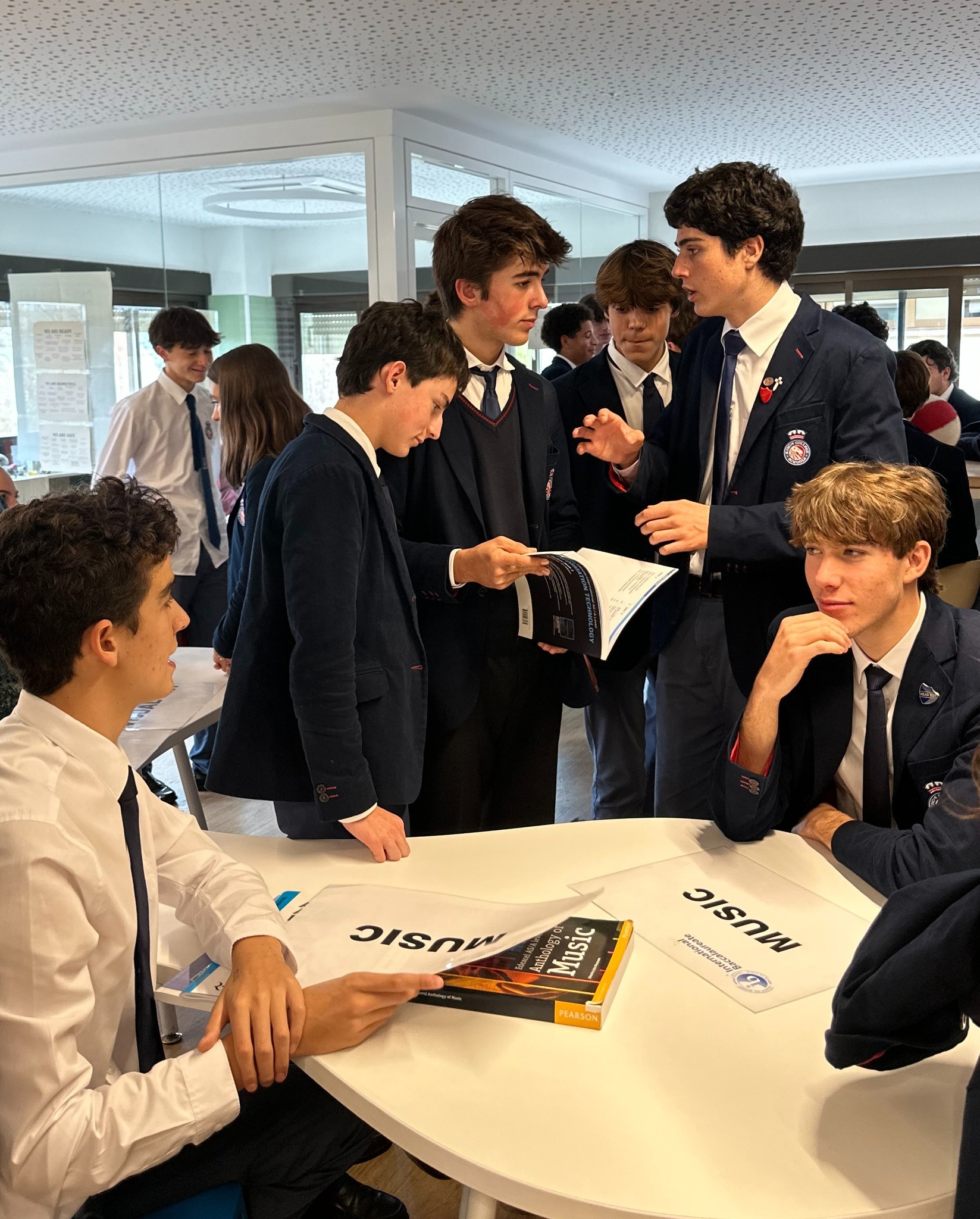
- Art, music, IT, Computer Science, Media Studies
A-Levels
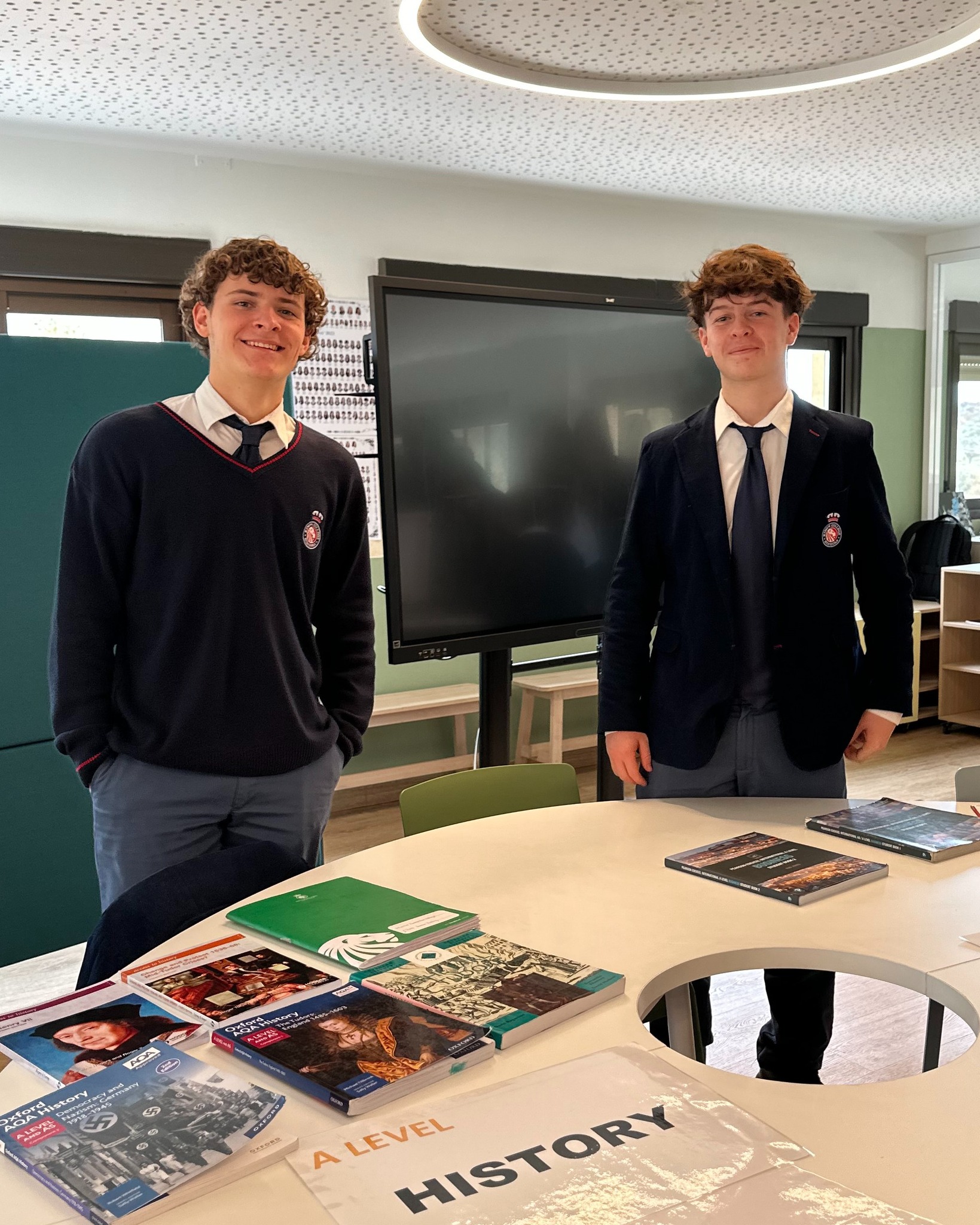
The two-year A-Level programme offers in-depth study in three or four disciplines—Britain’s gold standard that top universities particularly value. The first year establishes foundations, while the second develops critical thinking and analytical skills to considerable depth.
Entry requires at least five IGCSE passes at grade C or above, including English and mathematics. For subjects chosen for advanced study, grades equivalent to A and B are preferable, and for math-related tracks, A* or A becomes necessary to handle the workload.
Subject choices:
- English literature and language, math, further mathematics
- Biology, chemistry, physics, psychology
- History, geography, economics, business studies
- French, Spanish, German
- Art, music, IT, media studies
IB Diploma
The IB Diploma requires six subjects from six groups plus three mandatory core parts: an extended essay of 4,000 words, theory of knowledge lessons, and creativity-activity-service programme. At least three subjects proceed at higher level, with the rest at standard, which ensures comprehensive education without splitting sciences from humanities.
Unlike conventional routes, the diploma checks not just examinations but oral talks, projects, plus practical work. Research shows graduates enter top universities 18% more often and achieve higher marks there, thanks to self-organization skills built throughout.
Six subject groups:
- Native language
- Second language
- Individuals and societies
- Experimental sciences
- Mathematics
- Visual arts
Click this button to go to the main page of the educational institution.
Videos
Videos not found.
Want a Specific Cost Estimate?
Contact us to receive a detailed cost estimate and additional expenses tailored just for you.
Submit Your RequestSubmit Your Application
Fill out the form and receive all the necessary information.
Submit application